
ActiGraft+ Whole blood clot
An autologous, point-of-care wound management system by Legacy Medical Consultants. A 20 mL venipuncture becomes a whole-blood-clot wound dressing in 5–10 minutes at the point of care — no centrifuge, no donor tissue, no additives.
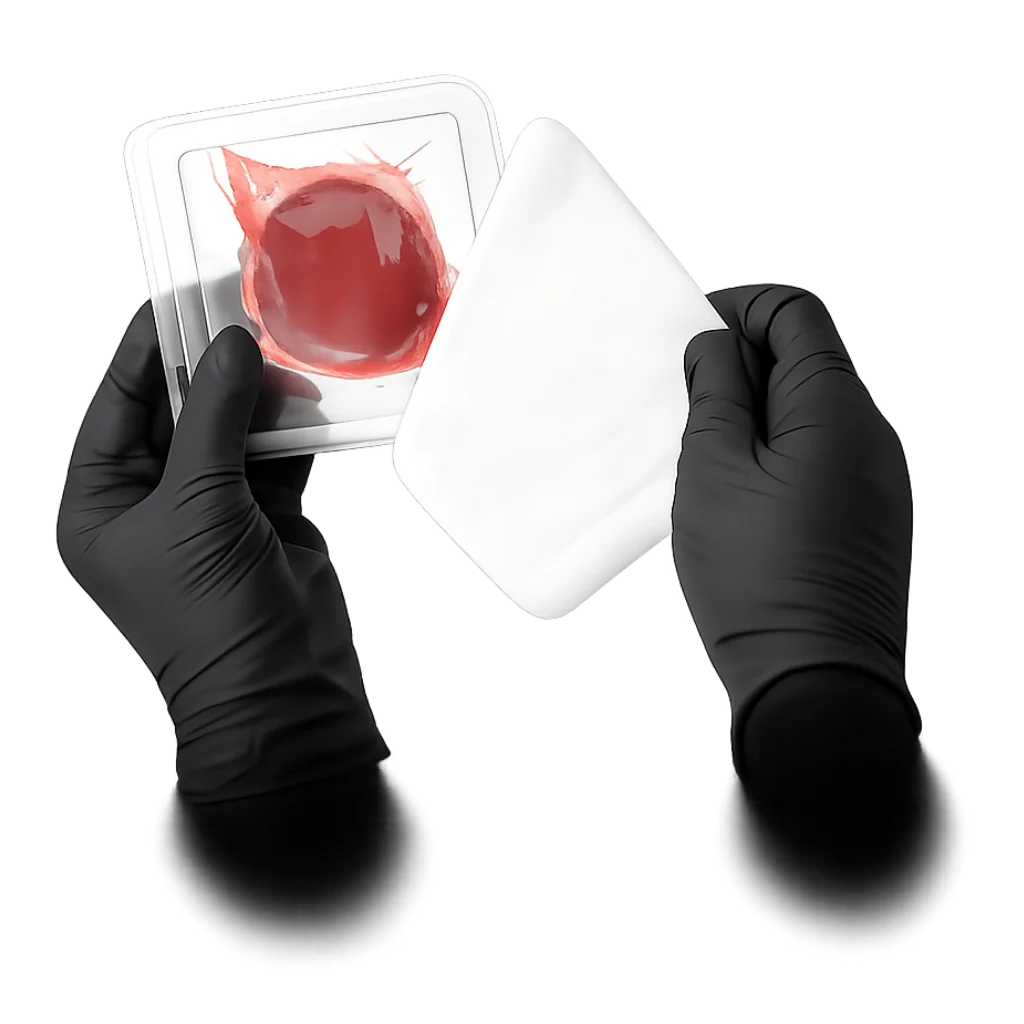
Point-of-care, in 5–10 minutes of coagulation.
From blood draw to applied dressing — a streamlined, centrifuge-free workflow any clinical setting can execute.
Blood draw
20 mL (20 cc) of autologous blood drawn from the patient directly into anticoagulant tubes. No centrifuge, no donor tissue.
Prepare & mix
20 mL is drawn from the tubes into the syringe, injected into the sterile mold, and mixed for 15–30 seconds.
Clot formation
Blood coagulates at point of care in 5–10 minutes (+5 min on blood thinners). Blood can be drawn and stored up to 24 hours prior for scheduling flexibility.
Application
Tyvek backing removed, gel loosened and transferred, excess fluid drained. The gel is sized and applied directly to the wound.
Secure & dress
Steri-strips secure the autologous gel, primary dressing applied. Single 28 cm² application covers wounds up to 56 cm².
Natural healing, activated at the point of care.
Concentrated growth factors, cytokines, and fibrin delivered directly to the wound bed — from the patient's own blood.
173% healing advantage
173% more patients healed in the intervention arm vs. standard of care (ITT population, odds ratio 2.73) in a randomized controlled trial of diabetic foot ulcers.
Streamlined procedure
No centrifuge, 5–10 minute coagulation, and the flexibility to draw and store blood up to 24 hours prior. All sterile tools and materials included in a single kit — no additional supplies required.
Natural healing, your blood
Created from the patient's own peripheral whole blood — even in the presence of blood thinners. Immediately available at point of care. No donor tissue, no wait. Suitable for patients with religious or allogeneic sensitivities.
Reference: Snyder R, Nouvong A, Ulloa J, et al. Efficacy and safety of autologous whole blood clot in diabetic foot ulcers: a randomized controlled trial. Journal of Wound Care. Published online 30 Aug 2024. doi:10.12968/jowc.2024.0195
Coding, coverage, & documentation.
Everything billing and compliance teams need to support a clean HCPCS G0465 claim — drawn from Legacy Medical Consultants’ 2026 billing guide and Medicare NCD 270.3 guidance.
Coding & Coverage
ICD-10 required pairing
Claims reporting G0465 must include both:
- Diabetes mellitus codeE10.621, E11.621, E08.621 (foot ulcer) or the corresponding skin-ulcer codes
- Chronic ulcer codeL97.xxx (foot/leg) or L98.xxx (other anatomic sites) matching the wound location
Medical-necessity documentation
Legacy Medical’s chart-note checklist aligned with NCD 270.3:
- Patient & servicePatient name and date(s) of service
- HPIChronic wound type, duration, prior non-responding care
- ICD-10 codesDiabetes + chronic ulcer (both required)
- RationaleChronic non-healing nature, failure of prior therapy
- Wound documentationMeasurements (before & after), tunneling/undermining, drainage, debridement history, wound-bed description
- Clinical contextComorbidities, wound barriers (neuropathy, arterial, osteomyelitis), failure-of-response detail
Extended-coverage rule: Beyond 20 weeks, applications require modifier KX with physician documentation of continued ulcer progress and rationale for continued therapy.
Coverage for non-diabetic chronic ulcers (G0460) is determined by local MACs. Covered places of service include POS 11 (office), 19/22 (outpatient hospital), 49 (independent clinic), 12 (home), and 31 (SNF Part B). ActiGraft is contraindicated in ulcers due to malignancy or with active clinically diagnosed infection. Coverage and payment depend on payer policy and medical necessity; consult your MAC or the ActiGraft Coverage Support Program for case-specific guidance.
What to know about ActiGraft+.
ActiGraft+ is contraindicated in ulcers due to malignancy or ulcers with active clinically diagnosed infection.
Add ActiGraft+ to your practice.
A 30-minute consultation to walk through clinical training, reimbursement pathways, and implementation.